



This book discusses the history and considerations of site-specific art and locational identity.
Kwon begins by articulating a timeline for site specificity. He outlines that it emerged in the late 1960’s in the wake of the minimalism art movement. This early site-specific art tended to be more literal – of actual locations and very tangible notions of reality.
Modernist style arts severed much of the artist’s connection to space and expressed indifference to the site. The art then rendered itself more autonomous and self-referential. The art became transportable, placeless, and nomadic.
Site specific works emerged, forced a dramatic reversal of this modernist paradigm. In this way, the art gave itself up to its environmental context, allowing and recognizing itself to be formally determined and directed by it.
“The space of art was no longer perceived as a blank slate, a tabula rasa, but a real place.” (1) This way of thinking was the dawn of the formalized site specific art movement. This helped to embue a sense of fully embodied viewership.
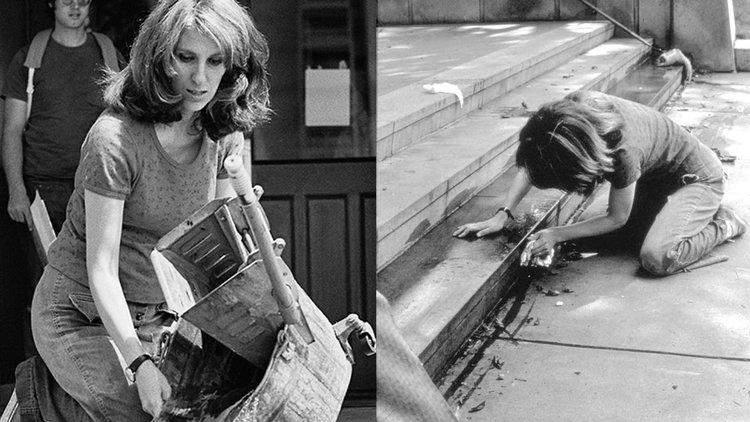
- Mierle Ladermann Ukeles created a series of “Maintenance Art” performances in museums in 1973.
- She offered a window into a space that is viewed as pristine white spaces, immaculate and emblematic of its “neutrality” yet is structurally dependent on hidden and devalued labor of daily maintenance and upkeep.
- Her work showcased the hierarchical system of labor relations – social and gendered division between notions of the public and private (19).
- The movement worked to de-aestheticize and dematerialize work to go against institutional habits and desire to continue to resist commodification of art. (24)
- Blurred division between art and non art.
Art + Culture, Art + Disciplines, Art + Space
Viewers day to day engagement with the work bolsters the art and success of it. (30)
What commodity status does ephemeral art take on now in social media? (31)
Many precedents in the beginning of site specific art like it’s impossibility to be moved and reproduced have shifted, in order to be housed in museums. (33)
“Site-specific has come to mean ‘moveable under the right circumstances’.” (38). The artist must be present in the reproduction process to maintain the vision.
Artists feel pressured to recreate their pieces for gallery showings and museums in order to be relevant and taken seriously by the art world.
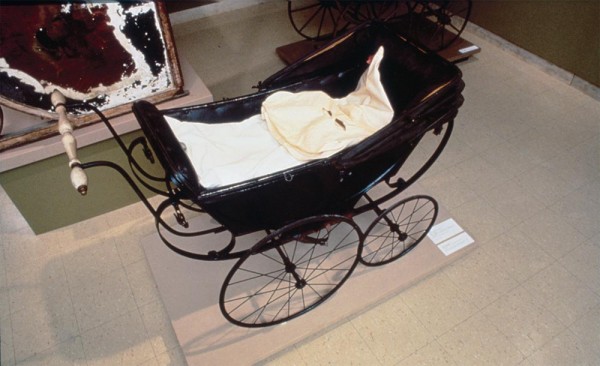
- Fred Wilson’s site specific piece Mining the Museum (1992) was made through his temporary reorganization of the institution’s permanent collection.
- http://www.mdhs.org/underbelly/2013/10/10/return-of-the-whipping-post-mining-the-museum/

Just like in Pablo Helguera’s book Education for Socially Engaged Art, Kwon also reiterates how the artist used to be a maker of aesthetic objects, but now they must be a facilitator, educator, coordinator, and bureaucrat. The artist has transitioned to facilitate the making process. (51)
“Certainly, site-specific art can lead to the unearthing of repressed histories, help provide greater visibility to marginalized groups and issues, and initiate the re(dis)covery of “minor” places so far ignored by the dominant culture.” (53) This work helps to illuminate hidden histories of those who are marginalized.
Kwon finishes the book with a question- how can community art continue to be life-giving collaboration between the community and the artist? The popularization of newly bureaucratized and formulaic versions of community based art: artist + community + social issues = new critical/ public art, can leave a gap in authentic creation.
 ART & BEA